The modern world runs on semiconductors. Smartphones, data centers, cars, industrial machines, and military systems all depend on chips measured in nanometers. At the center of this system stands one company that most consumers never see but nearly every major technology firm relies on: TSMC.
Understanding the TSMC history is not just a story about corporate success. It is a case study in industrial strategy, geopolitics, and the power of specialization. Taiwan did not become the backbone of the global semiconductor supply chain by accident. It happened through deliberate policy choices, unusual business discipline, and a refusal to follow Silicon Valley’s preferred myths about innovation.
This is how Taiwan built the world’s most important chipmaker.
Taiwan Before TSMC: A Manufacturing Economy Looking Upstream
In the 1970s, Taiwan was not a technology leader. Its economy focused on labor-intensive manufacturing: textiles, basic electronics assembly, and export-driven industrial goods. While this created growth, it also exposed a structural weakness. Taiwan captured little of the value created by the technologies it helped assemble.
Policymakers understood that long-term competitiveness required moving up the value chain. The question was how. Advanced semiconductor manufacturing was already dominated by firms in the United States and Japan. Entering that market head-on would have required enormous capital, technical talent, and patience.
Instead of chasing vertically integrated giants, Taiwan explored a different idea: specialization.
The Founding Vision: Morris Chang and a Radical Business Model
The turning point in TSMC history came in 1987 with the founding of the company by Morris Chang, a semiconductor veteran with decades of experience at Texas Instruments.
Chang’s insight was deceptively simple. Chip design and chip manufacturing did not have to live under the same corporate roof. At the time, nearly every major semiconductor company was an integrated device manufacturer (IDM), handling design, fabrication, and sales internally. Chang believed this structure was inefficient and risk-prone.
TSMC would do one thing only: manufacture chips for others. No competing products. No in-house designs. No favoritism.
This “pure-play foundry” model was radical. It required customers to trust that TSMC would never become a rival. It required investors to accept thinner margins in exchange for scale. And it required a government willing to support an industry with long payback cycles.
Taiwan provided all three.
The Role of the Taiwanese State
The Taiwanese government was not a passive observer in TSMC’s rise. Public institutions helped fund early operations, supplied research talent, and anchored TSMC within the broader Hsinchu Science Park ecosystem.
This was not central planning in the heavy-handed sense. It was targeted industrial policy. The state reduced risk during the most capital-intensive phase of the company’s life and gradually stepped back as TSMC proved commercially viable.
Crucially, Taiwan resisted the temptation to interfere in day-to-day management. Strategic alignment existed, but operational discipline remained in the hands of engineers and executives.
That balance is one of the most underappreciated elements of TSMC history.
Riding the Fabless Revolution
In the 1990s, a structural shift reshaped the semiconductor industry. New companies began focusing exclusively on chip design while outsourcing manufacturing. These “fabless” firms needed a partner that could deliver cutting-edge fabrication without competing against them.
TSMC was ready.
Companies like NVIDIA, Qualcomm, and later Apple built their business models around the assumption that TSMC would execute flawlessly.
As the fabless ecosystem grew, TSMC’s scale advantages compounded. More customers meant more capital investment. More investment meant faster process advances. Faster advances attracted more customers.
By the early 2000s, the foundry model was no longer an experiment. It was the industry standard.
Process Leadership as a Strategic Weapon
TSMC’s dominance is often explained in terms of technology nodes: 7nm, 5nm, 3nm. But the deeper story in TSMC history is not just technical brilliance. It is operational consistency.
Each new node requires tens of billions of dollars in capital expenditure, extreme ultraviolet lithography, and manufacturing yields that approach perfection. One missed cycle can cost customers years.
TSMC made a strategic decision to prioritize reliability over short-term profit. It invested aggressively even during downturns, ensuring that capacity and process leadership were ready when demand returned.
Competitors hesitated. TSMC did not.
The Apple Effect
The relationship between TSMC and Apple reshaped both companies. Apple needed a manufacturing partner capable of delivering massive volumes of cutting-edge chips on predictable schedules. TSMC needed a customer willing to commit early to new nodes.
This alignment allowed TSMC to justify record-breaking capital investments and gave Apple performance and efficiency advantages that competitors struggled to match.
In TSMC history, this partnership marks the moment when the company became not just an industry leader, but an indispensable one.
Geopolitics and the “Silicon Shield”
As TSMC grew more central to global technology, it also became geopolitically significant. Advanced chips are now viewed as strategic assets, influencing economic competitiveness and national security.
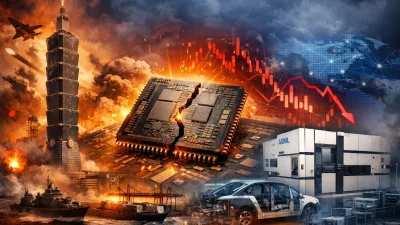
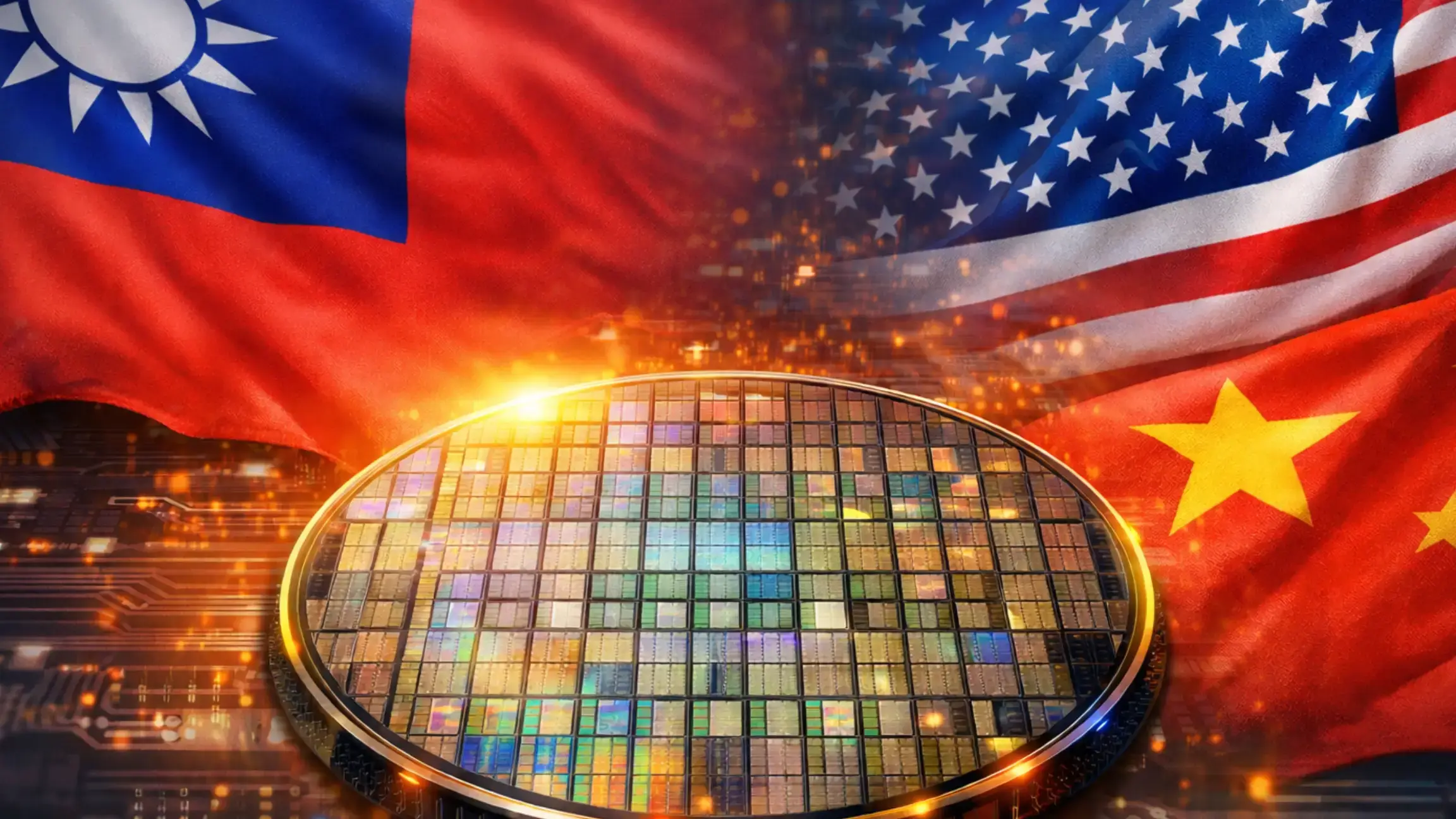
Taiwan’s semiconductor dominance has been described as a “silicon shield,” creating international incentives to preserve stability. At the same time, it has drawn attention and pressure from major powers seeking supply chain resilience.
TSMC has responded cautiously, expanding manufacturing in the United States and Japan while keeping its most advanced processes anchored in Taiwan.
This balancing act is one of the defining challenges of the company’s future.
Risks and Structural Limits
Despite its success, TSMC history is not a story of invulnerability.
- Capital intensity continues to rise, pushing the limits of sustainable investment.
- Geographic concentration exposes the company to natural and political risk.
- Talent constraints challenge long-term scaling as process complexity increases.
- Global duplication efforts threaten margins as governments subsidize local fabs.
None of these risks are existential in the short term. Together, they define the next phase of strategic decision-making.
Why TSMC’s Model Still Matters
TSMC did not win by being flashy. It won by being boring in the most disciplined way possible. No consumer brand. No product launches. No narrative about “changing the world.”
Instead, it built trust, process by process, node by node.
The lesson of TSMC history is that industrial leadership in the 21st century does not always come from disruption. Sometimes it comes from doing one hard thing better than anyone else, for decades, while everyone else chases the next idea.
Conclusion: Taiwan’s Quiet Masterstroke
TSMC stands as proof that small economies can shape global systems if they choose the right leverage point. Taiwan did not dominate semiconductors by copying Silicon Valley or Tokyo. It built something structurally different and executed it with near-obsessive consistency.
As technology grows more complex and geopolitical pressures intensify, the world’s dependence on TSMC is unlikely to fade. If anything, it will deepen.
Understanding how this happened is not optional anymore. It is essential to understanding how the modern digital world actually works.